
From the first briefing through the final return to base, the day is structured around safe access, direct observation, education and useful conversation.
The exact route and subject change with the program, but the operating rhythm remains deliberate. A flagship institutional field day is designed around a manageable group—our planning model uses up to approximately 20 participants—so people can hear, see, ask questions and participate rather than simply move through a tour.
Welcome, program objectives, route and weather review, participant needs, communications and the day's environmental questions.
Field procedures, vehicle entry/exit, seat restraints, communications, emergency expectations and participant orientation.
Participants travel with trained drivers in appropriate field vehicles while staff manage the route, pace and changing conditions.
At planned locations, participants get out, observe conditions firsthand and learn from subject-matter experts and local context.
A catered field lunch creates deliberate time to compare observations, ask questions and hear perspectives while still on the landscape.
The afternoon connects earlier observations with other conditions, management challenges, opportunities and practical questions.
Return travel, closing discussion, key observations, documentation and identification of useful follow-up or next actions.
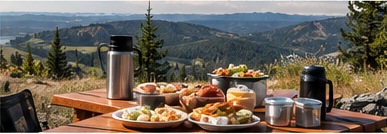
Because some of the most useful conversation occurs after people have had time to see several locations and begin connecting what they observed. The NBM Field Table creates that pause deliberately.
A professionally catered lunch, a comfortable field setup and enough time to talk make the meal a working part of the educational experience—not an afterthought.